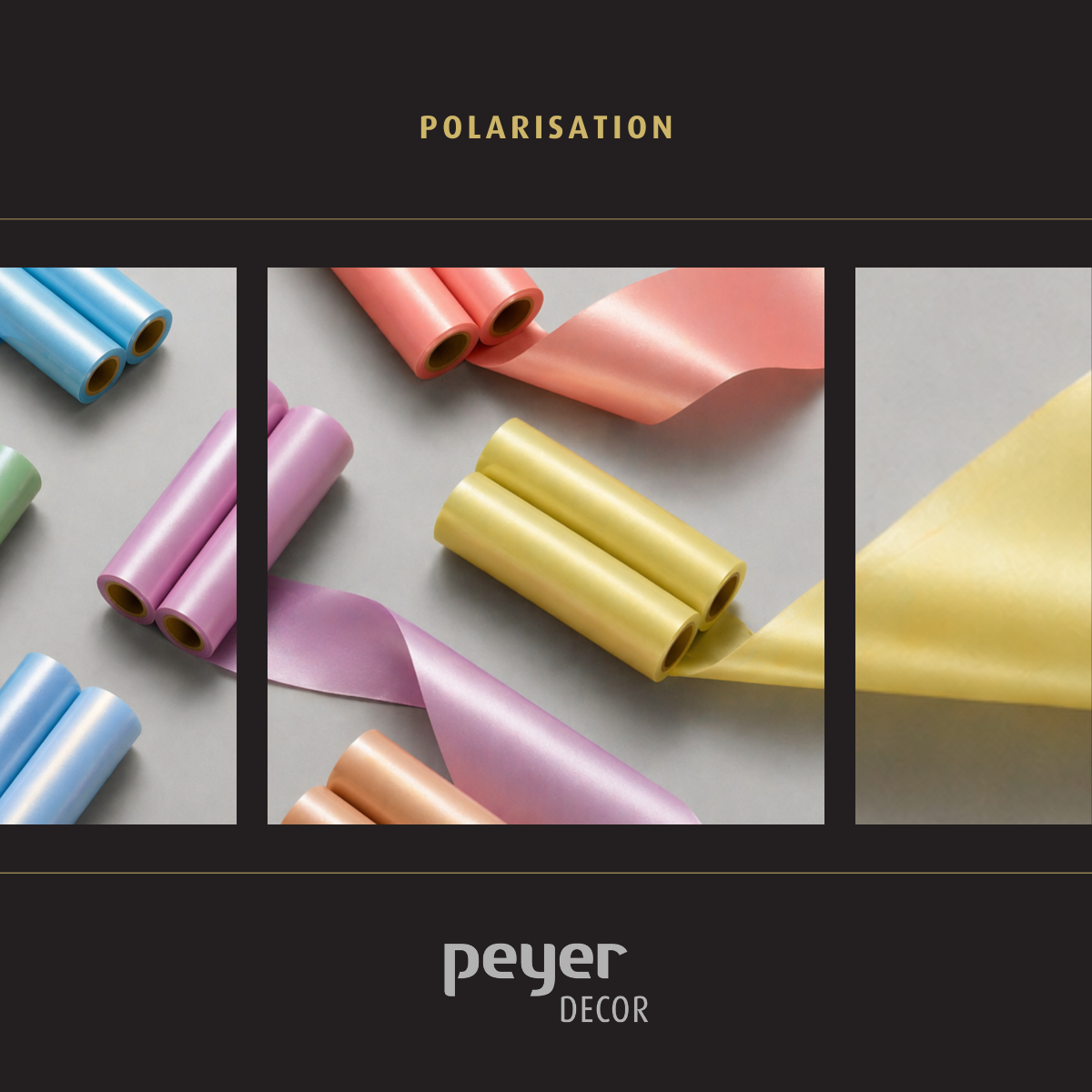
Embossing Tools
Precise tools for emotional product experiences and high-quality design solutions. With high-quality embossing tools, workpiece holders and clichés made from silicone, brass, steel and aluminum, we are partners for the automotive industry, pharmaceutical and cosmetics industry, household appliance and electrical device manufacturers, the watch industry and the packaging industry.
Perfection in every dimension
Embossing Tools
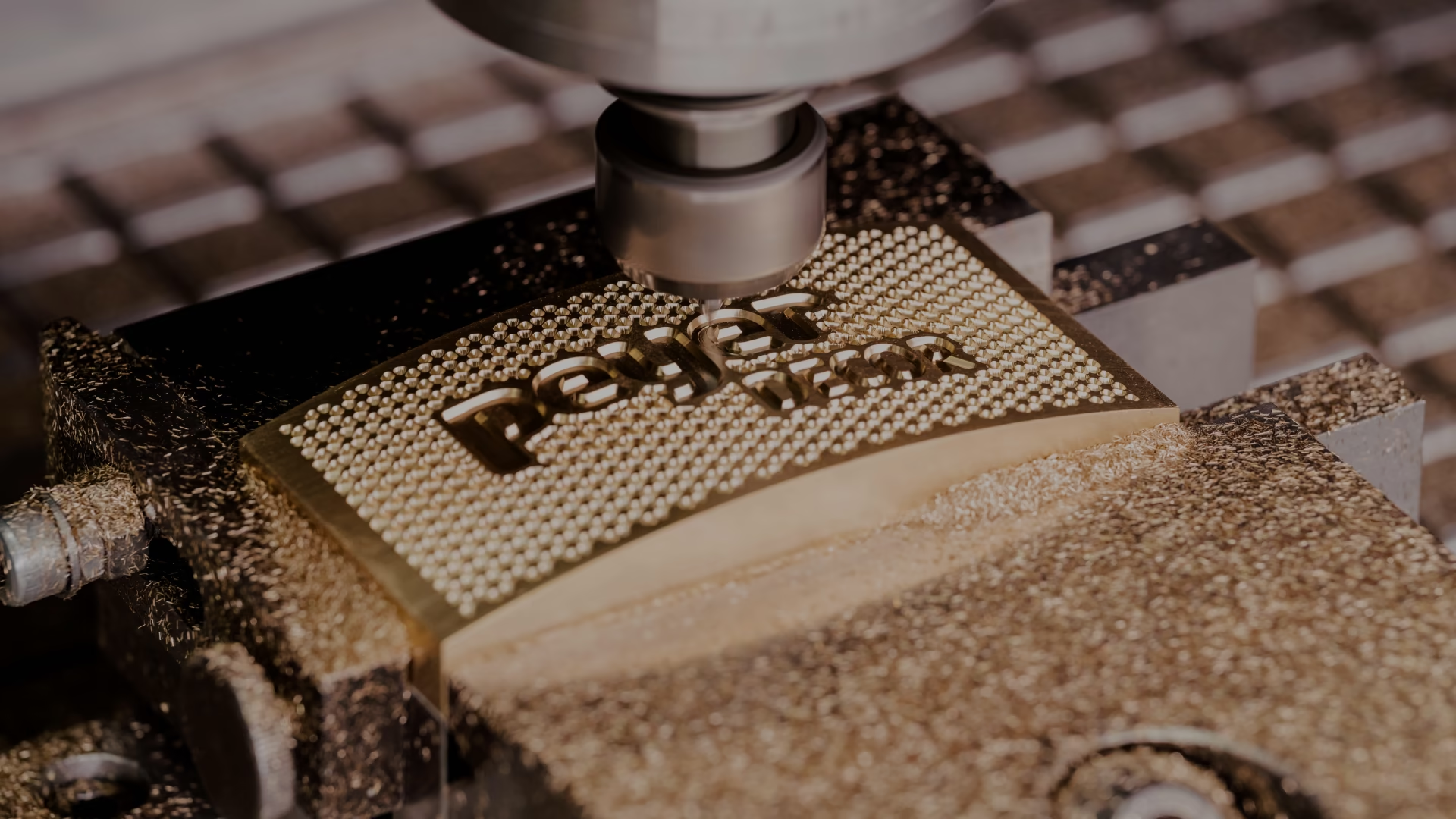
Embossing tools are high-precision components. Made from silicone, brass, steel or aluminum, with which decorations are transferred to surfaces through pressure and heat. They form the core of the hot stamping process and enable high-quality results for secondary and primary packaging.
Workpiece Holders
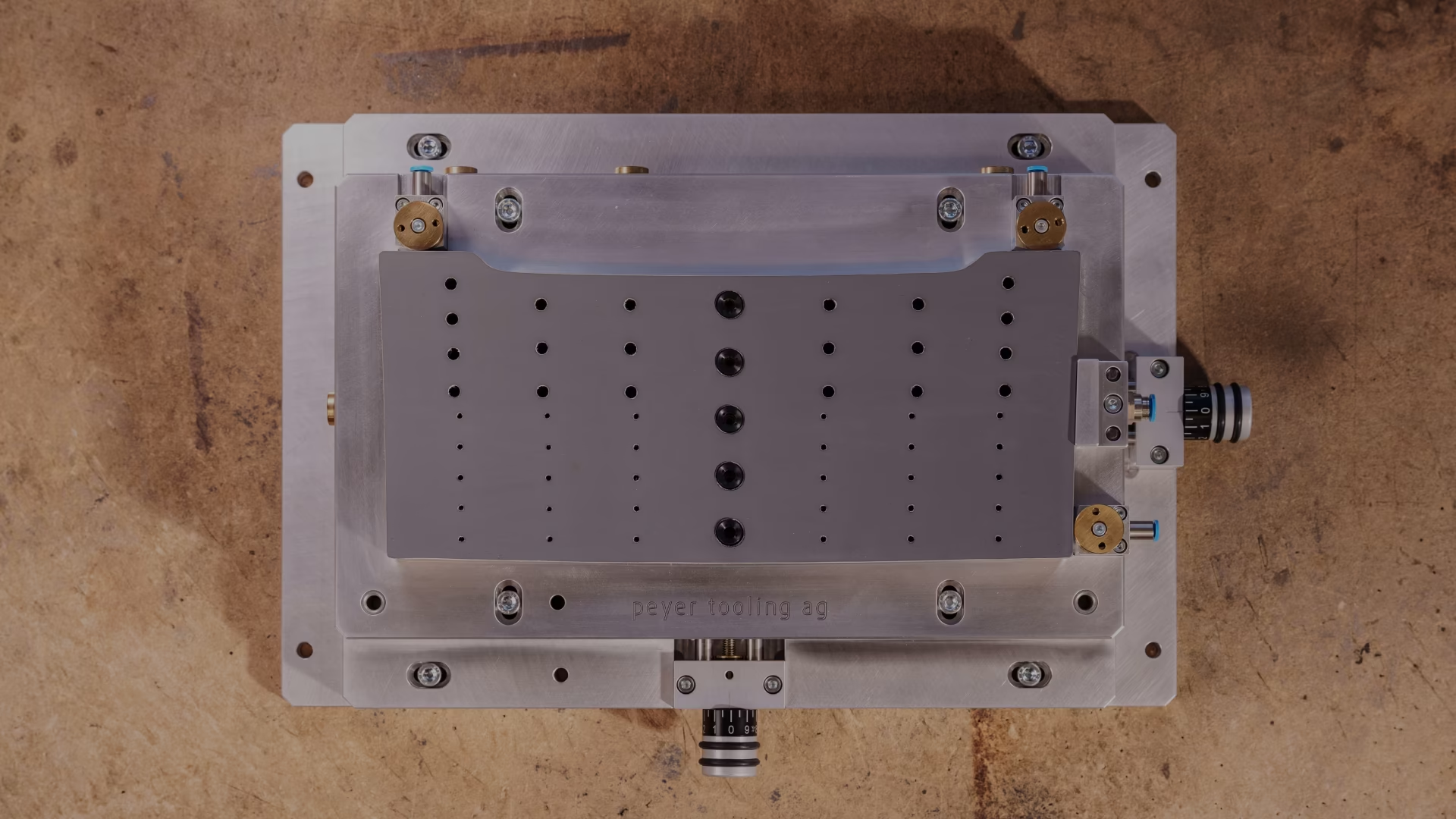
Workpiece holders fix parts during the embossing process so precisely that each decoration lands exactly at the right position. They ensure stable positioning, clean repeatability and thus a consistently high quality standard – regardless of geometry or material.
Special Applications
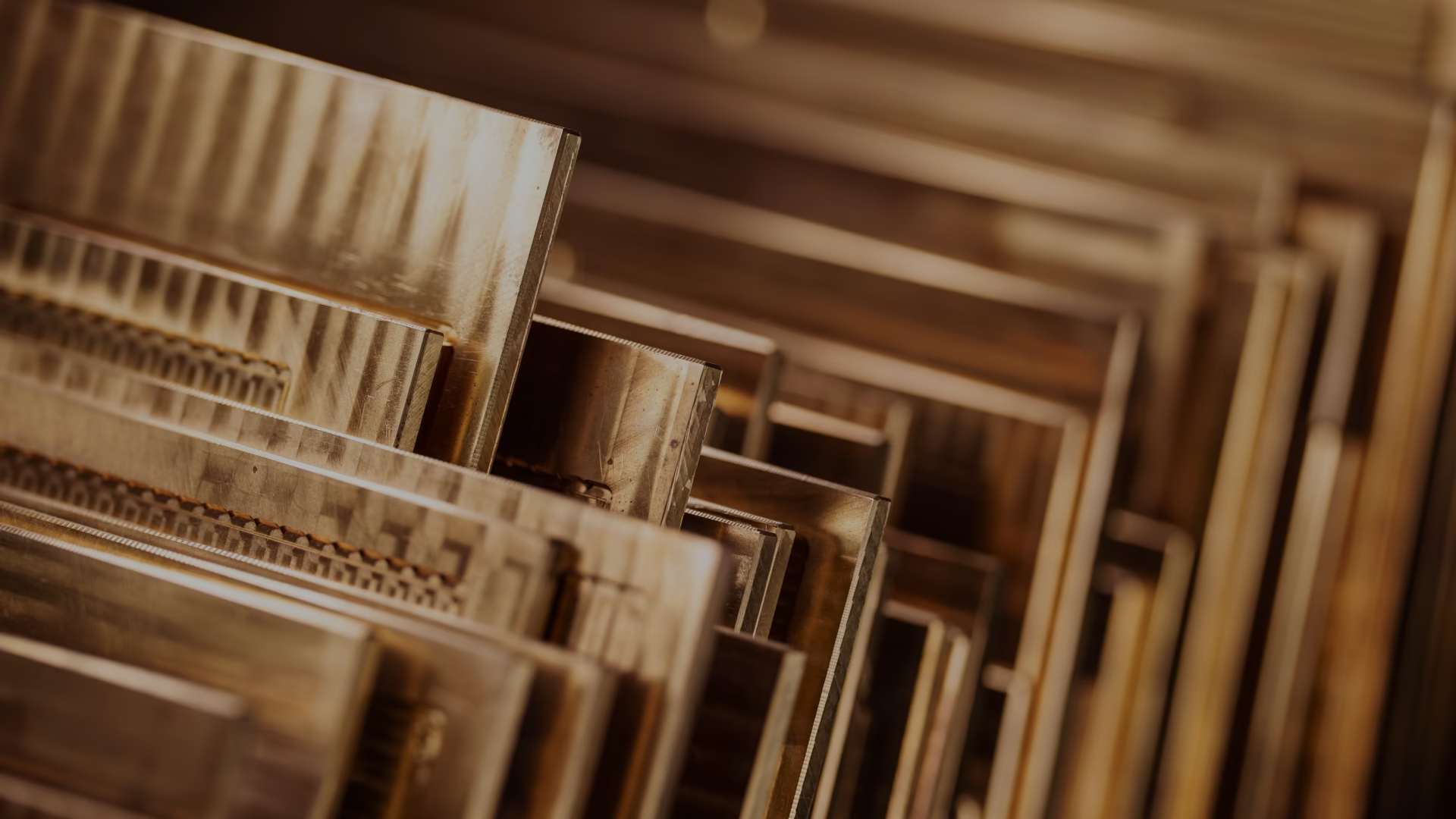
Special applications open possibilities when standard solutions reach their limits. Complex geometries, tight tolerances or special functional requirements can be safely mastered with precisely manufactured tools and individual setups. POM tools enable detail-precise embossings in flat or rotative applications and cleanly reproduce even multi-stage or plastic designs. For demanding workpieces, mirror welding molds ensure play-free holding and optimal support – combined from robust housings and precise 2K resin casting. Hybrid systems, special alloys and high-temperature components ensure reproducible results, high process stability and exactly the effect a product needs.
Ready for perfect results?
Do you have a project or would you like to learn more about our tools? Contact us for personal consulting. We accompany you on the path to your individual finishing result. Request technology consulting now.
FAQ
Essential facts about embossing tools, holders and their technical interaction with transfer foil.
Why is the interaction of tool and embossing foil crucial and what advantage does a system provider like us offer?
Tool and embossing foil only work perfectly when both are precisely matched: temperature window, adhesive activation, pressure distribution, contour transfer, and material behavior must fit together.
Because we unite tool development and foil technology under one roof, we can precisely design each element for the other – from the Shore hardness of a silicone tool to the adhesive chemistry of the foil.
The result: consistent quality, finer details, less waste, higher cycle rates, and visibly better results on glass, plastic, paper, and other surfaces.
Which factors determine the technical performance of an embossing tool?
Quality is created through material selection (silicone, brass, steel, aluminum), thermal conductivity, engraving depth, Shore hardness, tool geometry, and design for the respective substrate. Only when heat conduction, pressure behavior, and surface structure interact precisely do clear contours, cleanly defined edges, and durable decorations emerge.
How do we adapt tools to complex geometries or special shapes?
For three-dimensional shapes, we develop modular tool structures, segmented silicone molds, CNC-engraved metal segments, or flow-through heating elements.
This allows clean and process-reliable decoration of radial surfaces, multiple radii, chamfers, or technically demanding plastic parts.
Why are workpiece holders necessary and how do we develop them?
Workpiece holders fix the part with absolute positional accuracy, ensure stable pressure distribution, and prevent warping. We manufacture both form-fitted holders as well as 2K resin casting solutions and special clamping forms for glass, plastic, or metal. This guarantees register accuracy, consistent quality, and reliable results even with high volumes.
When are special tools needed and what distinguishes them?
Special tools are used when standard solutions reach limits: unusual materials, high temperatures, extreme precision requirements, or extraordinary component geometries. Here we use hybrid-built tools, special alloys, high-temperature silicones, or individually manufactured structural elements – precisely matched to product, process, and desired appearance.
News
Current trends, technologies and industry insights around modern finishing.

Design for Recycling: Why Great Packaging Design Builds Brand Trust